Wenjing Wang Lab
Using protein engineering, we develop tools and technologies to enable the investigation of neuronal circuits that underlie pain modulation, reward, respiration and other vital processes.

Using protein engineering, we develop tools and technologies to enable the investigation of neuronal circuits that underlie pain modulation, reward, respiration and other vital processes.
Our lab develops optogenetic and chemogenetic technologies for protein detection and manipulation in living cells. The long-term goal of our research group is to develop molecular tools for monitoring and manipulating various biological processes with a spatiotemporal control to advance neuroscience research and potential therapeutics.
We utilize cutting-edge protein engineering methods, including directed evolution, to engineer these new tools. Various model systems—including mammalian cell culture, neuronal culture and animal models—are used to test the performance of our tools. Our goal is to expand the optogenetics and chemogenetics toolboxes, with widespread utility across multiple subfields of cell biology and neuroscience.

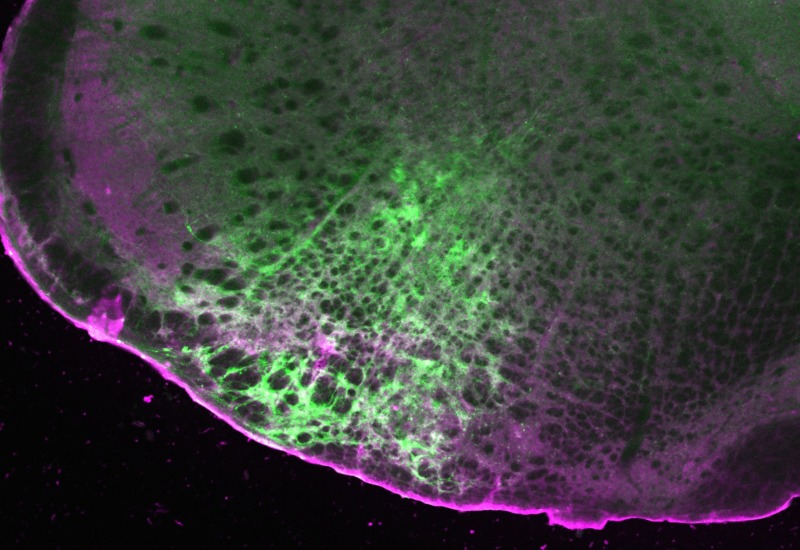
LSI researchers have developed a chemical tool to detect how signaling molecules travel within the brain to reach and interact with GPCRs. The tool can detect molecules across brain regions without sacrificing spatial resolution.